NEW YORK (AP) — Stock markets fell sharply worldwide after another leap for oil prices hiked the pressure even higher on the global economy. Brent crude, the international standard, briefly rose above $119 per barrel Thursday morning before pulling back to $110, which is still 3.2% up from the prior day. The S&P 500 fell 0.9% to deepen its drop for the week so far, which is on track to be its fourth straight losing week. The Dow Jones Industrial Average fell 415 points, and the Nasdaq composite fell 1.2%. European markets fell even more, and Asian markets closed lower.
THIS IS A BREAKING NEWS UPDATE. AP’s earlier story follows below.
Global energy prices soared Thursday after Iran attacked two oil refineries in Kuwait and a key natural gas facility in Qatar that can supply one-fifth of the world’s liquified natural gas.
The attacks added to fears the energy crisis triggered by the closure of the Strait of Hormuz to tanker traffic may be longer and more extensive than feared, with lasting damage to oil and gas production.
Brent crude, the international benchmark, rose nearly 6% to $113.77 per barrel, up from less than $73 per barrel on the eve of the war. U.S. benchmark crude was less affected by the latest attacks in the Middle East, rising less than 1% to $96.26 per barrel.
The European TTF benchmark for natural gas prices traded 17% higher on Thursday and has doubled in the past month.
The Iranian attack hit the Ras Laffan terminal for shipping out liquefied natural gas in Qatar. Qatar normally supplies some 20% of the world’s consumption of LNG, which can be carried by ship. The facility shut down after a drone attack. The closure of the Strait of Hormuz to most tanker traffic also left the gas with nowhere to go.
If the disruptions from Iran’s attacks on its Gulf Arab neighbors’ energy infrastructure keep oil and gas prices high for long, they could create a debilitating wave of inflation for the global economy.
Markets on Wall Street slipped before the opening bell. Futures for the S&P 500 and Dow Jones Industrial Average each fell a 0.1%, while Nasdaq futures dipped 0.3%.
On Wednesday, the Federal Reserve opted to leave its benchmark interest rate alone and projected just one more quarter-point cut this year due to ongoing elevated inflation and uncertainty about the ramifications the Iran war will have on the global economy.
Prices for gold and silver also tumbled, dragging down major mining stocks with them. Gold fell 4% to $4,697 an ounce, while silver slipped 8.7% to $70.80. Most industrial metals also saw their prices fall.
Shares in miners Hecla and Newmont slid 7.8%, while Freeport-McMoRan fell 4.6%.
Markets in Europe and Asia were getting hit much harder than U.S. markets. Germany’s DAX lost 2.4% by midday, the CAC 40 in Paris fell 1.7% and Britain’s FTSE 100 shed 2.1%.
In Asian trading, Tokyo’s Nikkei 225 fell 3.4% to 53,372.53 as the Bank of Japan also opted to keep its benchmark interest rate on hold at 0.75%, citing the war with Iran as one factor.
In its monetary policy statement the BOJ said that “in the wake of increased tension in the Middle East, global financial and capital markets have been volatile and crude oil prices have risen significantly; future developments warrant attention.”
Higher oil prices are a heavy burden for Japan, which like South Korea and Taiwan depends on imports of most raw materials for industries that rely heavily on oil and its derivatives.
The Kospi in Seoul lost 2.7% to 5,763.22.
In Hong Kong, the Hang Seng slipped 2% to 25,500.58, while the Shanghai Composite index shed 1.4% to 4,006.55.
Australia’s S&P/ASX 200 lost 1.7% to 8,497.80 and Taiwan’s Taiex fell 1.9%. In India, which has also suffered from shocks to supplies of oil and gas, the Sensex lost 2.7%.
“The combination of higher oil, rising U.S. yields, and a stronger dollar is acting as a macro wrecking ball across Asian assets and currencies,” Stephen Innes of SPI Asset Management said in a commentary.
___
Business Writer Matt Ott reported from Washington; McHugh contributed from Frankfurt, Germany.
News
Brent crude briefly tops $119 per barrel before pulling back, and stocks sink worldwide
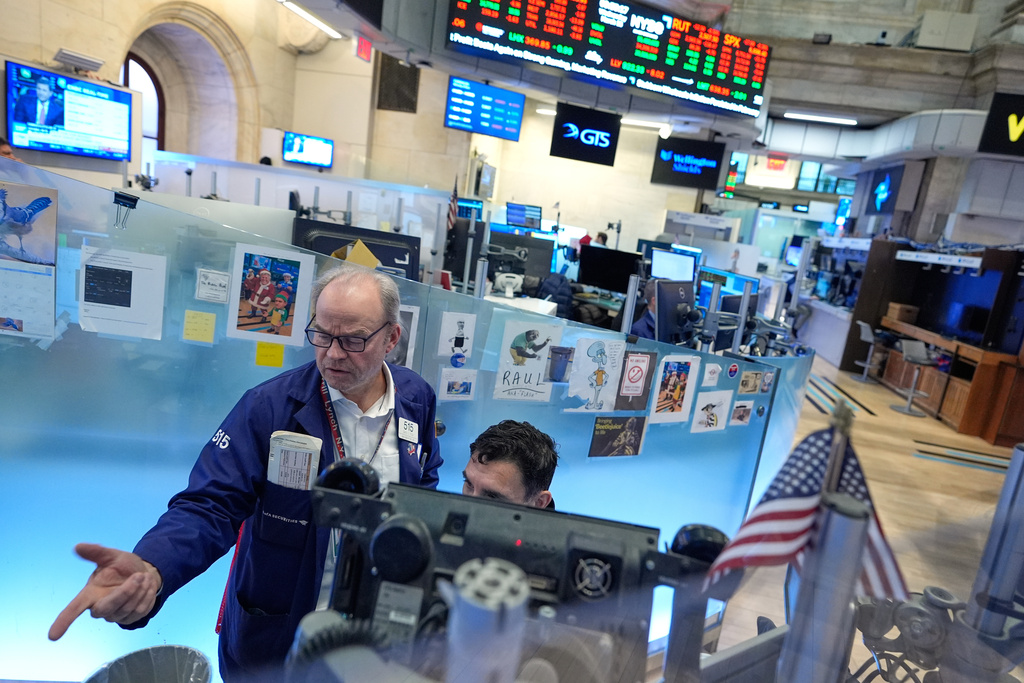
David O'Day, left, works on the floor at the New York Stock Exchange in New York, Wednesday, March 18, 2026. (AP Photo/Seth Wenig) Photo: Associated Press